History
Our story
How a wet hollow north of the mill became the place where Elderbrook remembers, told in 179 years and twelve moments.
Every town in Upper Canada buried its first settlers in a churchyard, and every churchyard filled. By the 1840s Elderbrook's, behind the little frame church on King Street, was so crowded that the sexton was opening old graves to make new ones. Something had to be done.
The answer came from the town's most powerful man. Captain Josiah Thorne owned the mill, the sawmill and most of the land north of the river, including a hollow too wet to plough, with a spring-fed pond in the bottom of it. He offered it to the town for one shilling, a token sum, on the condition that it be kept "so long as the Mere shall fill."
"For one shilling and the keeping of it, so long as the Mere shall fill."
From the deed of sale, 1847
The cemetery that grew there followed the new "rural cemetery" idea that had begun at Mount Auburn near Boston: not a crowded yard but a landscaped park, with winding lanes, specimen trees and views, where the living would want to walk. Elderbrook families came on Sunday afternoons with picnics, and some still do.
A timeline
1847
One shilling
Captain Josiah Thorne sells the hollow to the town. Margaret Lyle makes the first register entry on June 3: Agnes Moffat, aged 4.
1851
The churchyard moves
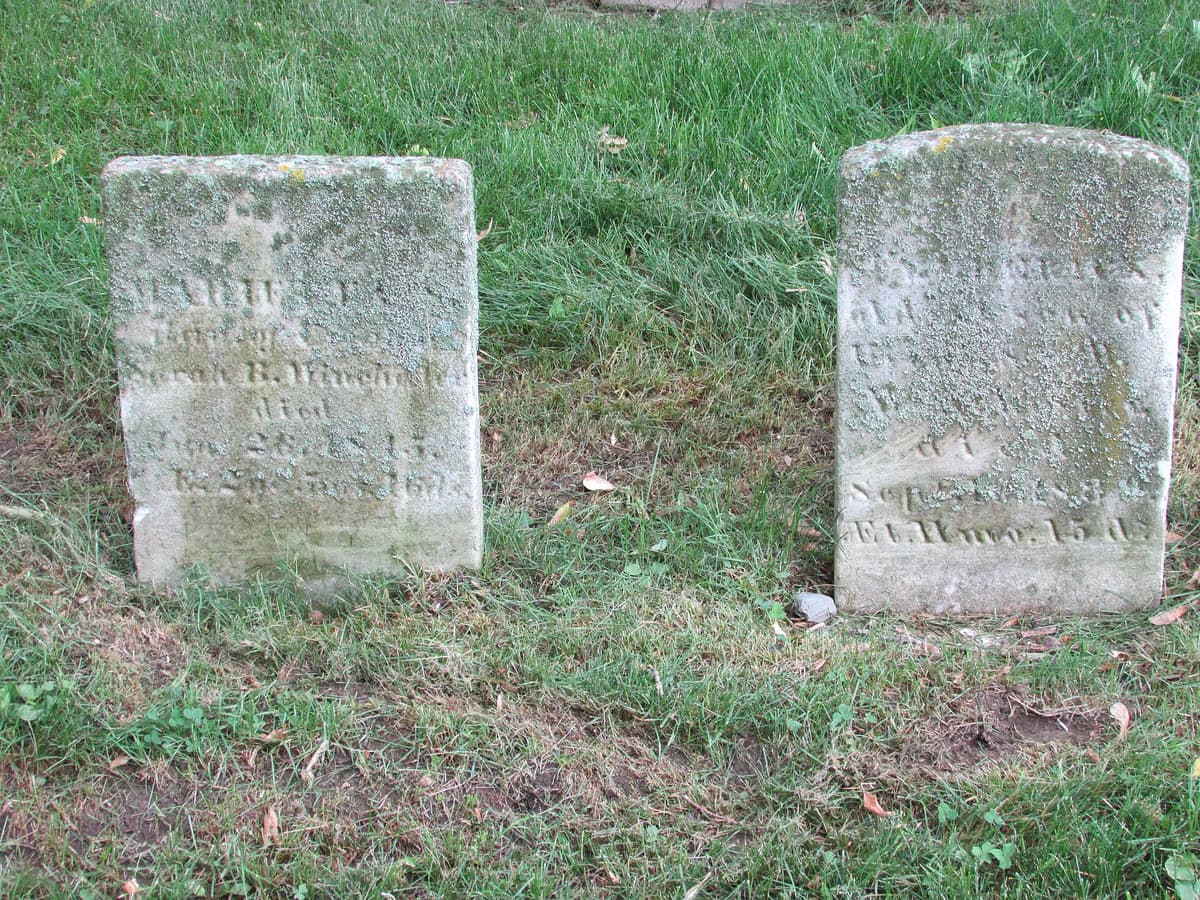
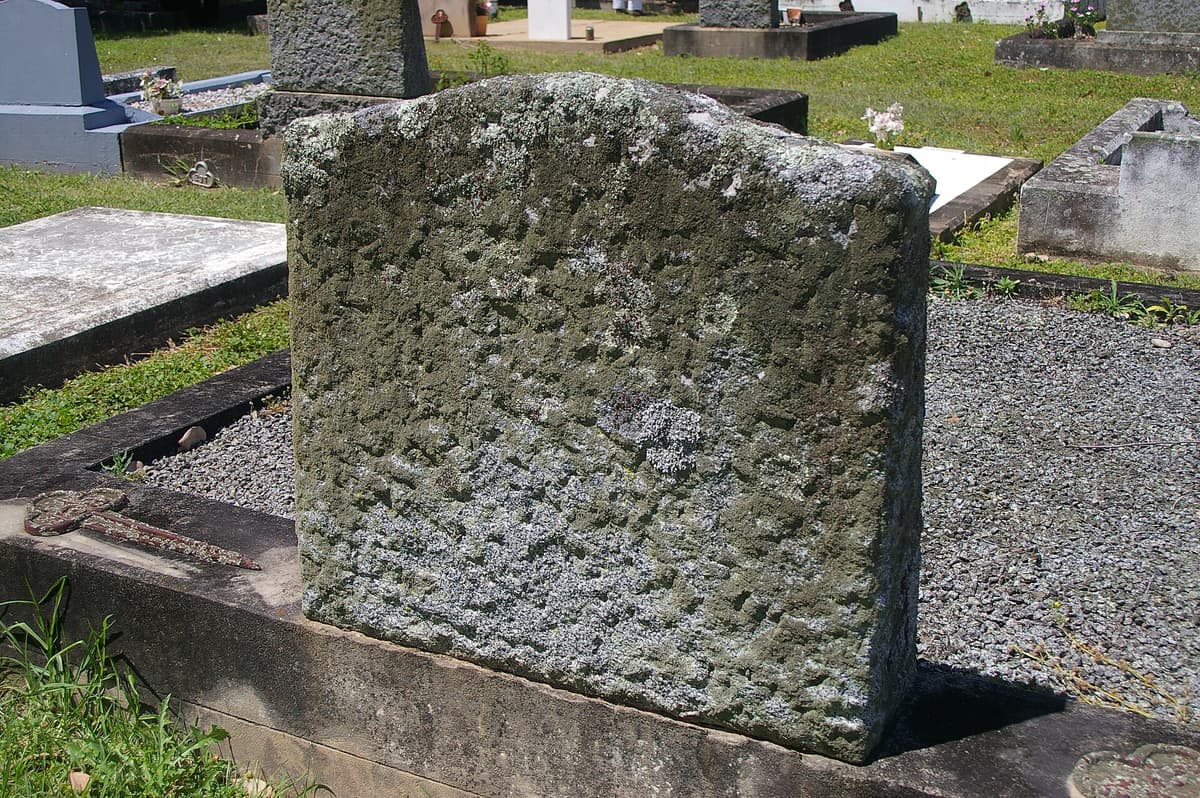
Ninety-one burials are moved from the overcrowded King Street churchyard. Their stones line the north wall of the Pioneer Ground.
1854
The cholera summer
Cholera kills 63 people in nine weeks. Dr. Augustus Penhale stays to treat the sick; many victims are buried along the north wall.
1871
Gates and chapel
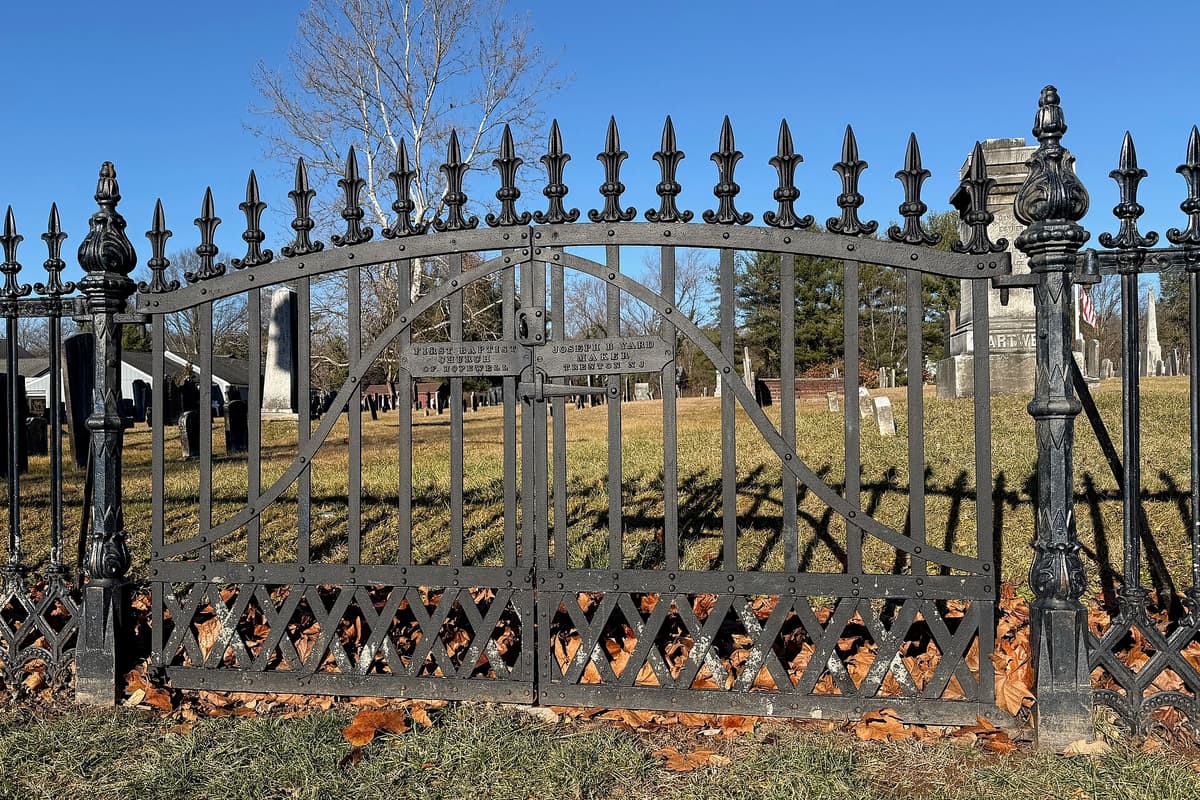
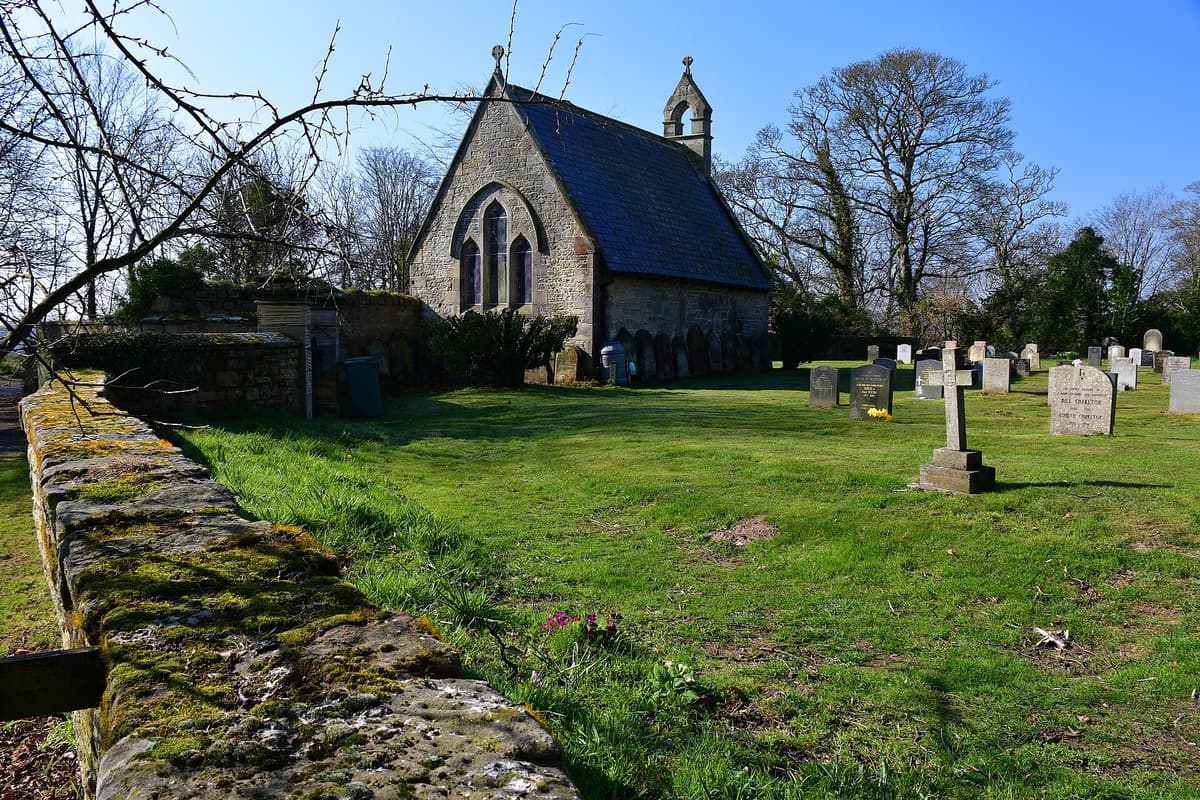
Thorne Chapel and the stone Lodge are built, and the cast-iron gates arrive by rail from Hamilton. Moses Calder forges the chapel gates.
1883
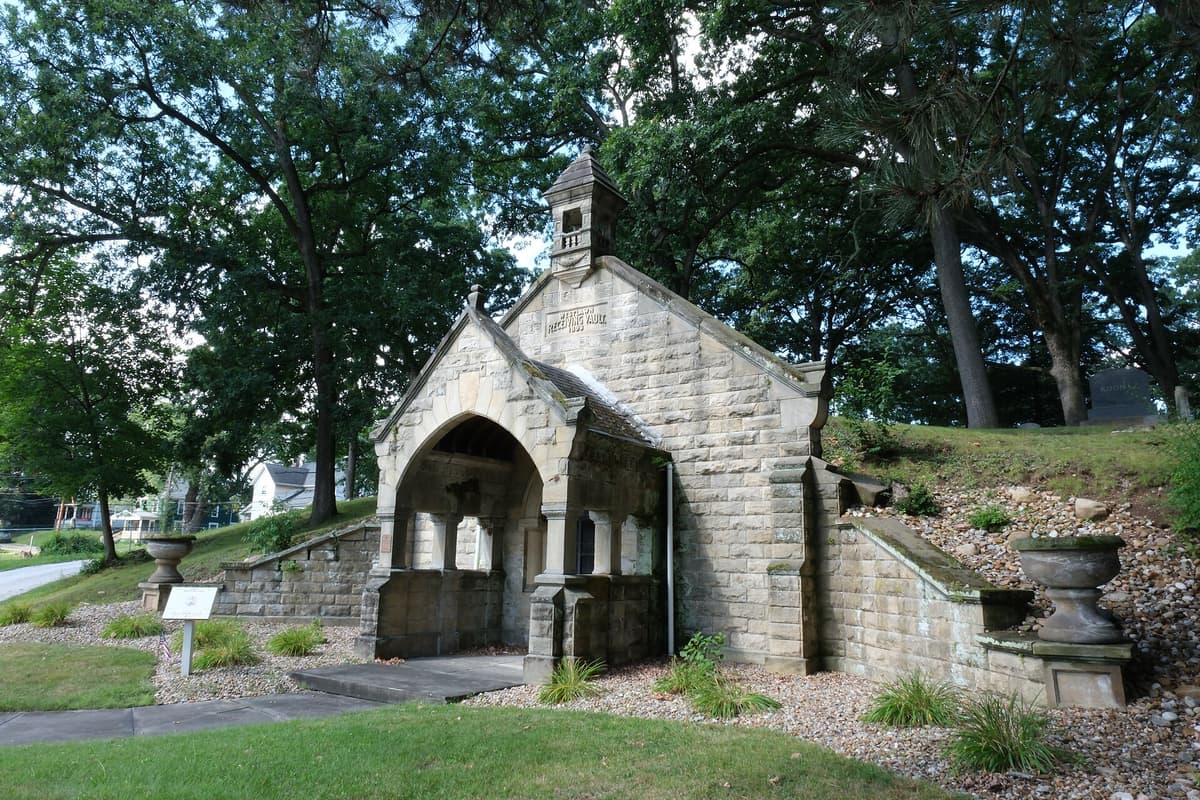
The Receiving Vault
A stone vault is built to hold caskets through the frozen months. It is used every winter until 1956.
1890
The beech is planted
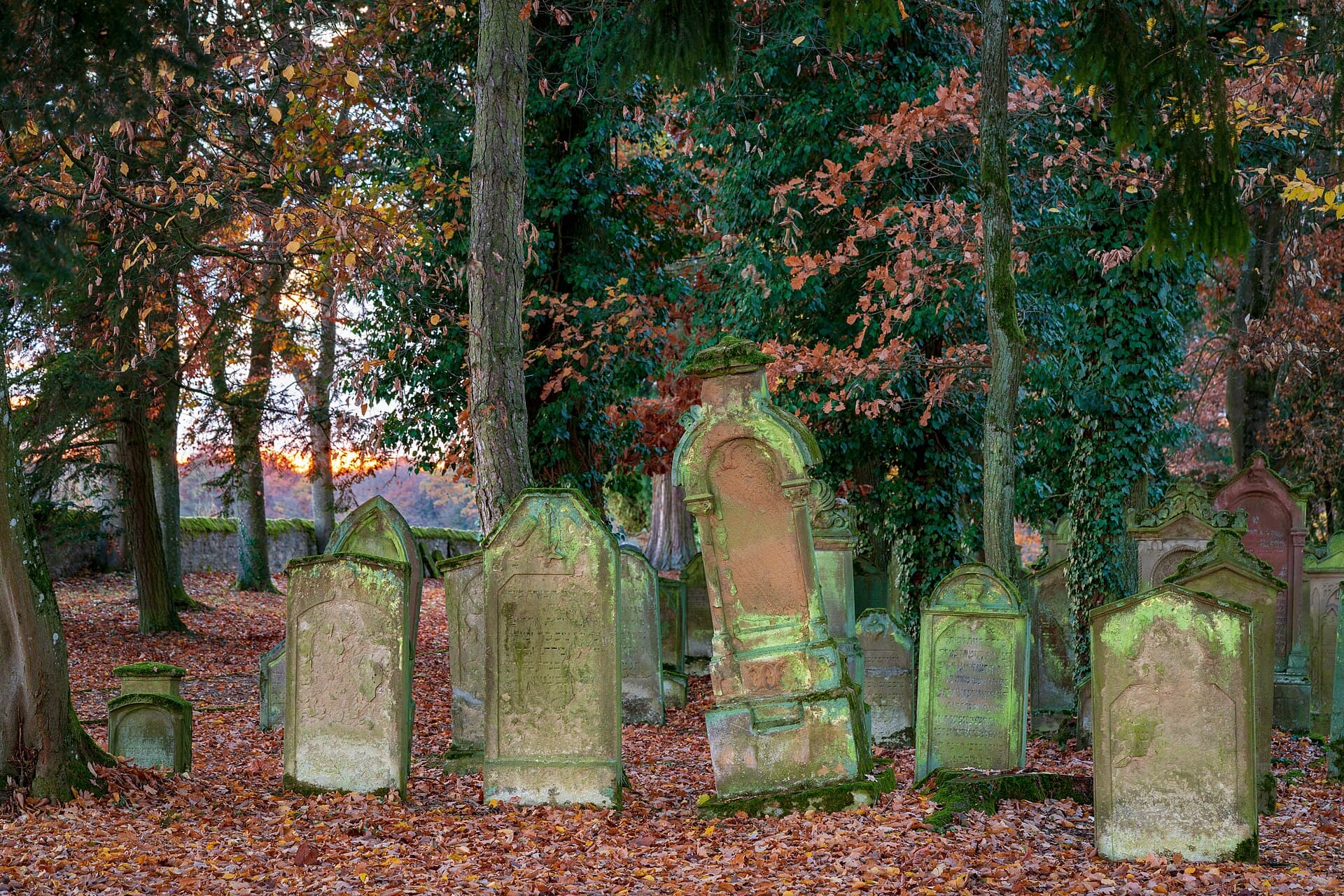
Sexton Hugh Ballantyne plants a weeping beech at the centre of a new circular section. It is now 26 metres across.
1918
Influenza
37 burials in October and November. The mill workers pay for the Corrigan family stone.
1921
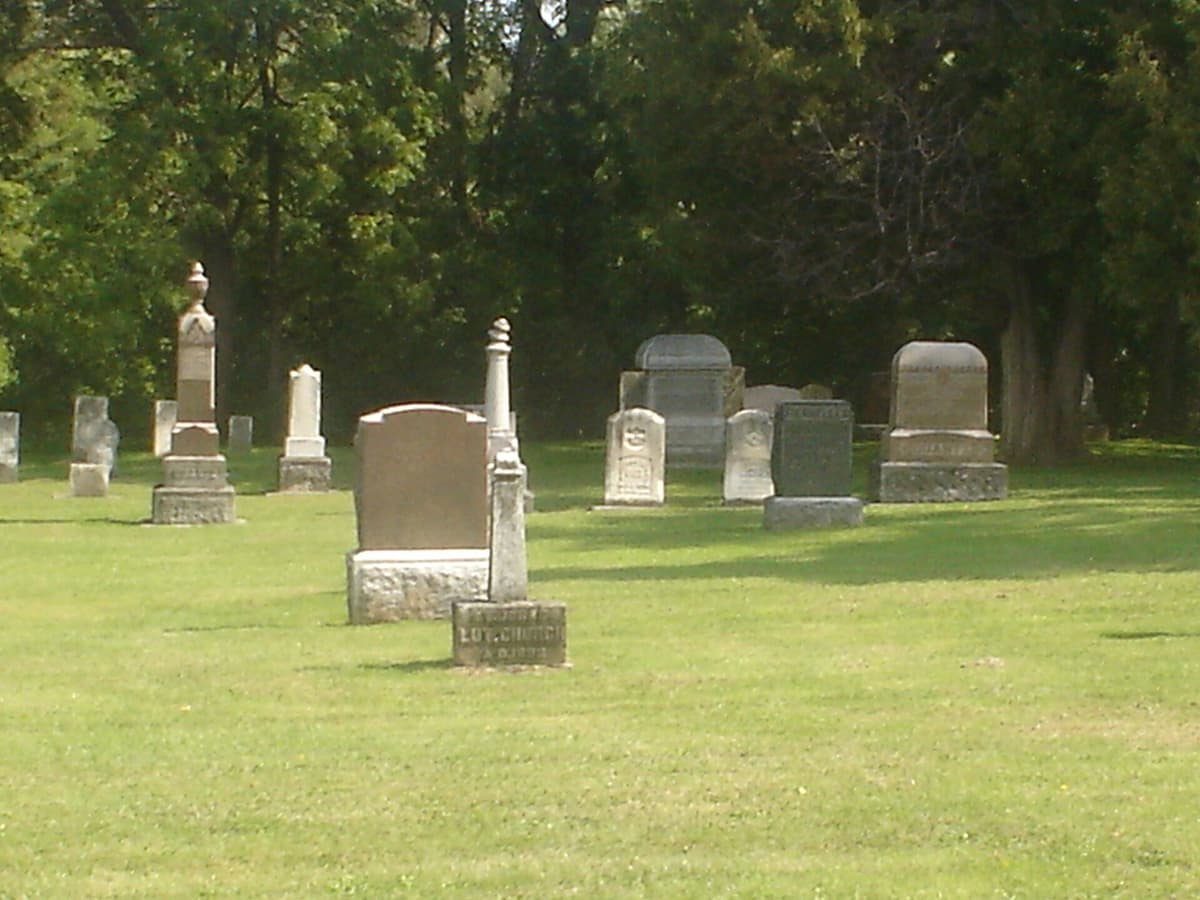
The Field of Honour
The Elderbrook Cenotaph is unveiled on November 11 with 41 names from the First World War.
1974
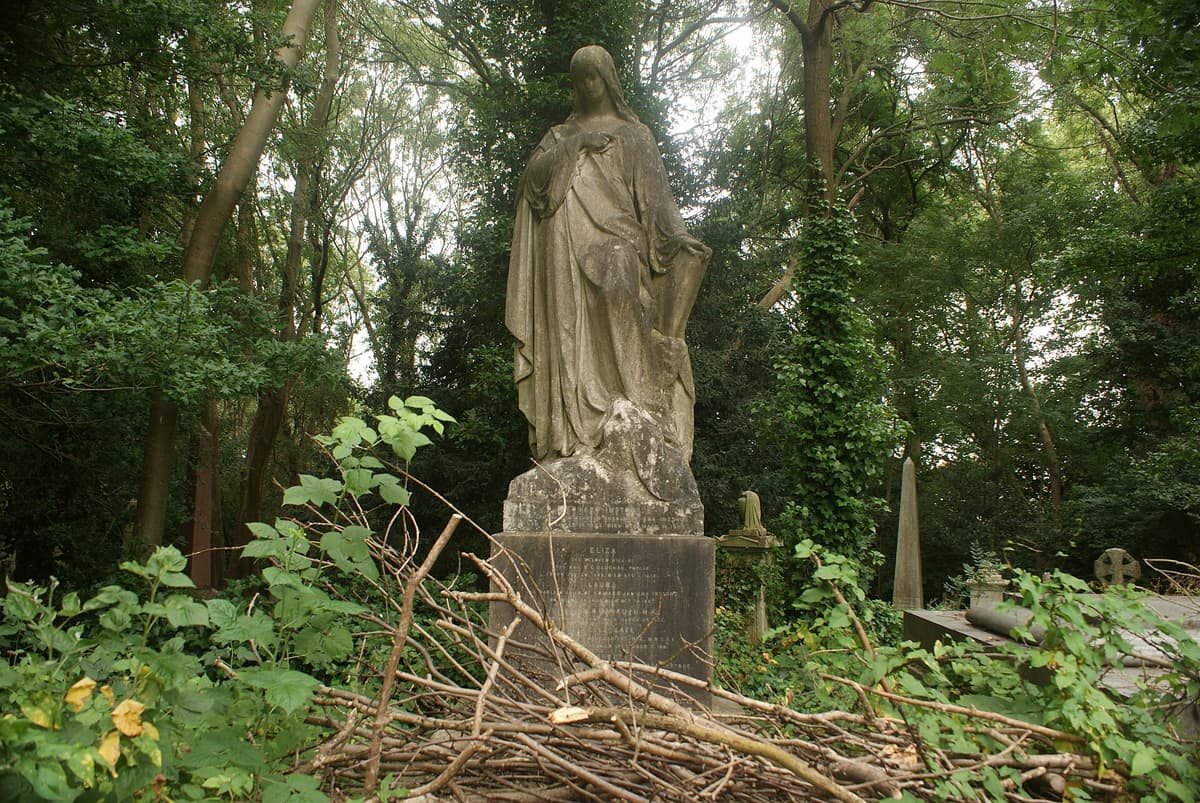
Elms lost, plates saved
Dutch elm disease takes the last of the Elm Walk trees. The same spring, Eleanor Kaye's glass negatives are rescued from a flooded basement.
1985
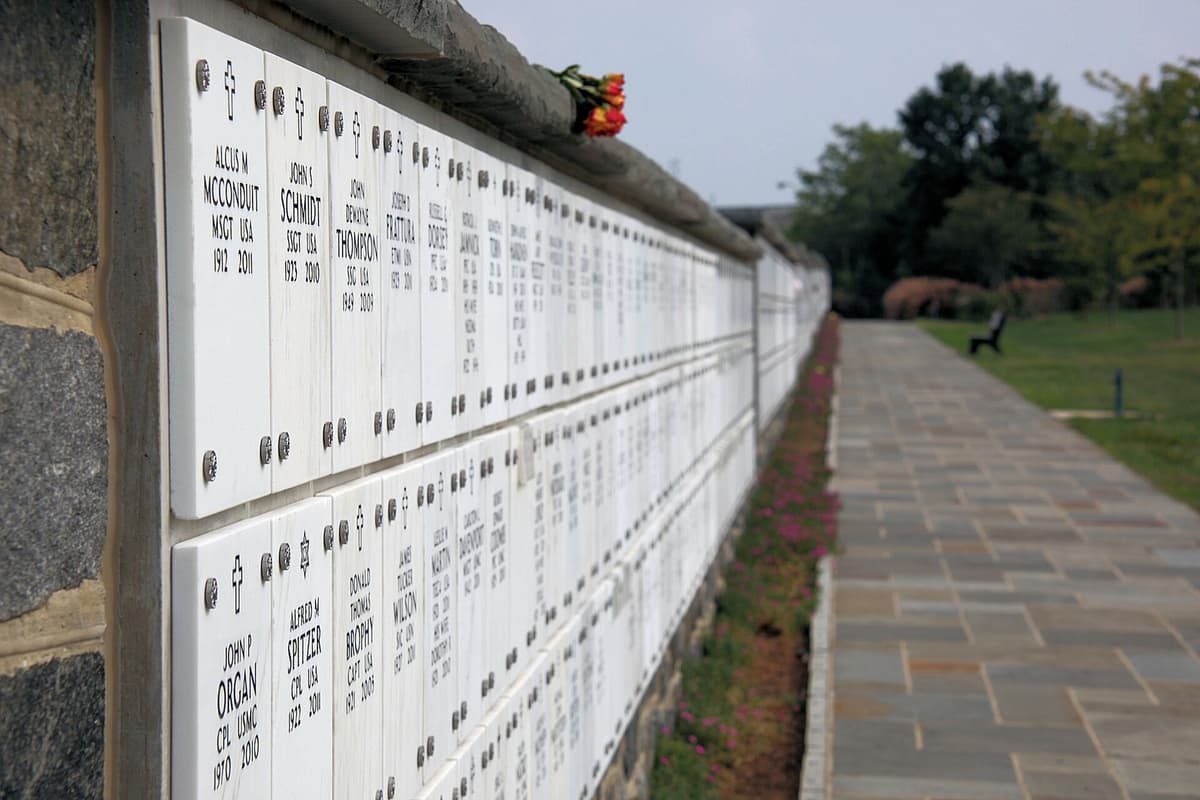
The Memorial Garden
The walled garden and columbarium open, as cremation becomes the choice of a third of Elderbrook families.
2014
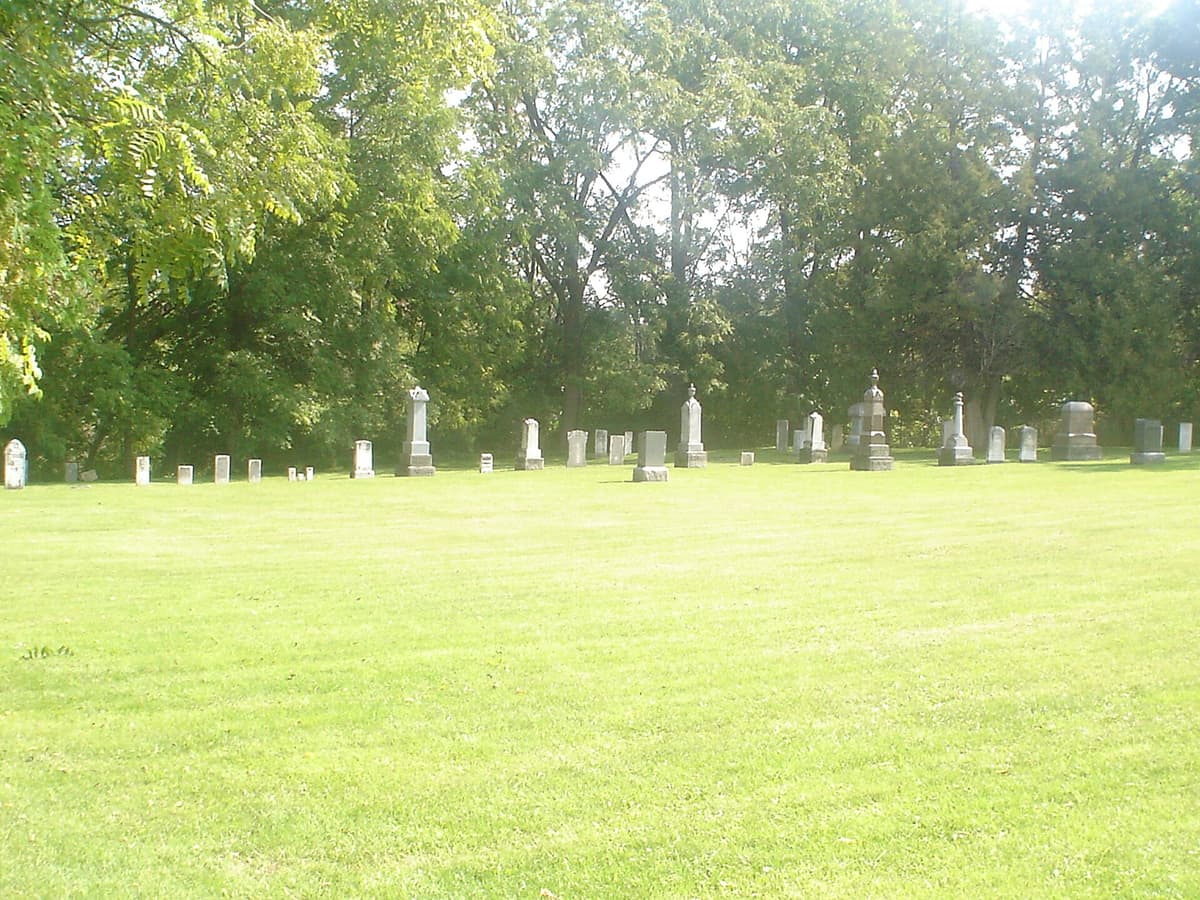
The Natural Meadow
Six acres of former hayfield become Ontario's smallest certified natural burial ground.
2026
The register goes online
Volunteers finish transcribing all 6,214 handwritten register entries.
Recognition
A designated heritage landscape
In 2009 the Town of Elderbrook designated Hollowmere a cultural heritage landscape under the Ontario Heritage Act. The designation protects the 1871 lanes, the chapel, the Lodge, the Receiving Vault and the beech.
It also means we can't simply build what we like. Every change to a heritage section is reviewed by the town's heritage committee, which is how it should be.