Weeping Beech Circle · 1890
European weeping beech
Fagus sylvatica 'Pendula'
Our most famous tree, 26 m across. Planted by sexton Hugh Ballantyne.
History
Six hundred trees of 48 species, a spring-fed pond and six acres of restored meadow. For many Elderbrook residents, Hollowmere is simply the most beautiful place in town.
Specimen trees
Weeping Beech Circle · 1890
Fagus sylvatica 'Pendula'
Our most famous tree, 26 m across. Planted by sexton Hugh Ballantyne.
Ridgeview · 1902
Acer saccharum
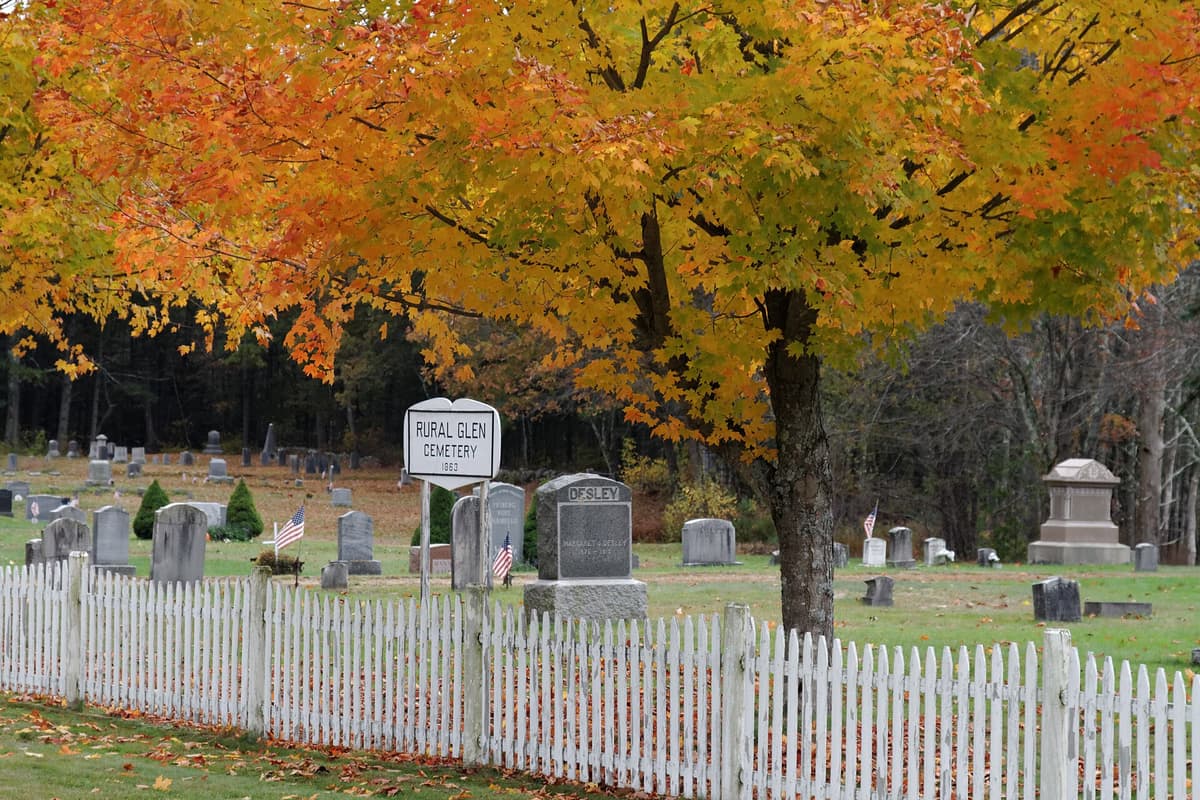
Forty-one trees along the east ridge. Peak colour mid-October.
Pioneer Ground · c. 1780
Quercus macrocarpa
Older than the cemetery. Probably left standing by the first surveyor as a boundary mark.
Elm Walk · 2008
Ulmus americana 'Liberty'
Disease-resistant elms replanted after the originals were lost in the 1970s.
The Mere · 1870s
Thuja occidentalis
The cedar hedge around the Mere, clipped by hand every August.
Natural Meadow · 2015
Larix laricina
A conifer that turns gold and drops its needles: the last colour of autumn.
The Natural Meadow
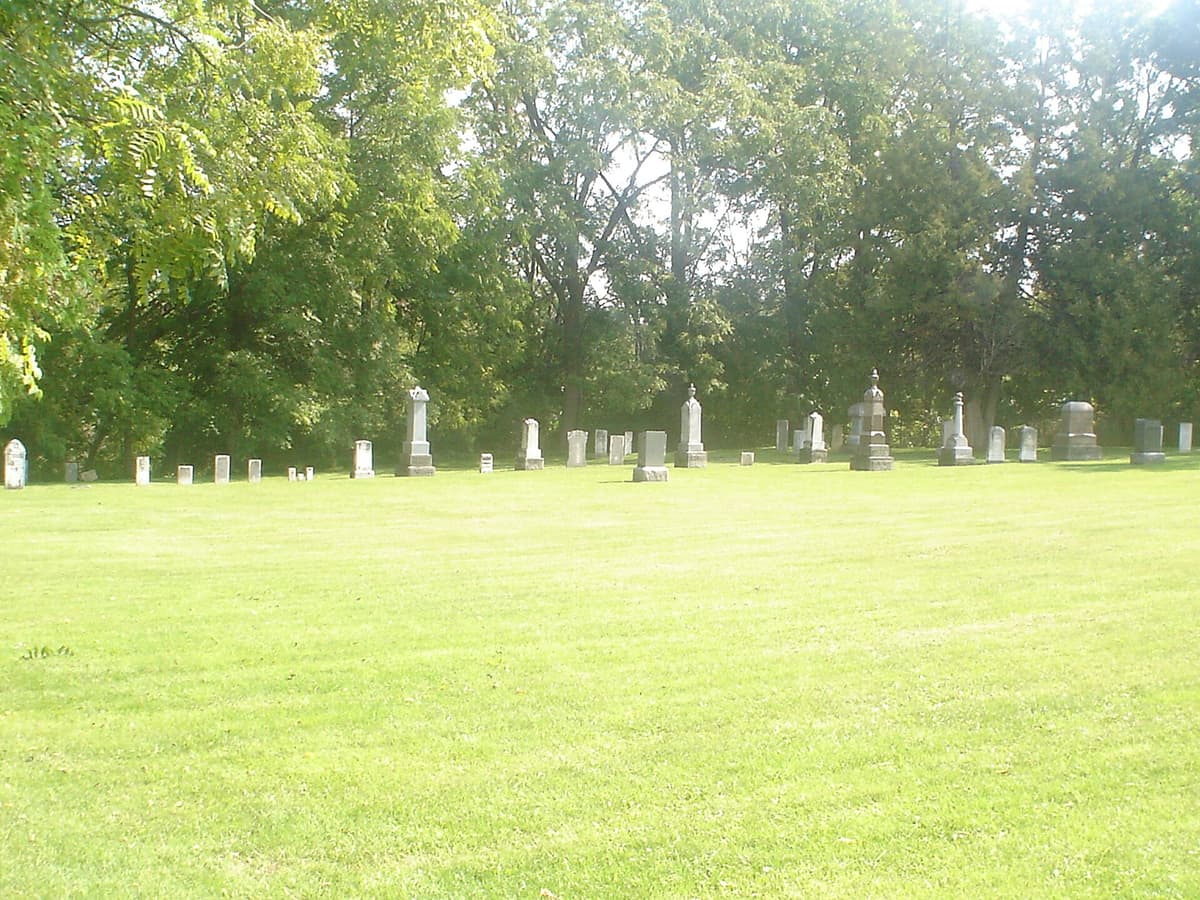
In 2014 we let six acres of hayfield return to tallgrass prairie: big bluestem, wild bergamot, coneflowers and milkweed. Natural burials there help pay for its care. In 2025, birders counted 71 species in the meadow, including nesting bobolinks, a threatened species in Ontario.
About natural burial
Trilliums in the Pioneer Ground, lilacs on the Victorian Terraces, spring peepers at the Mere.
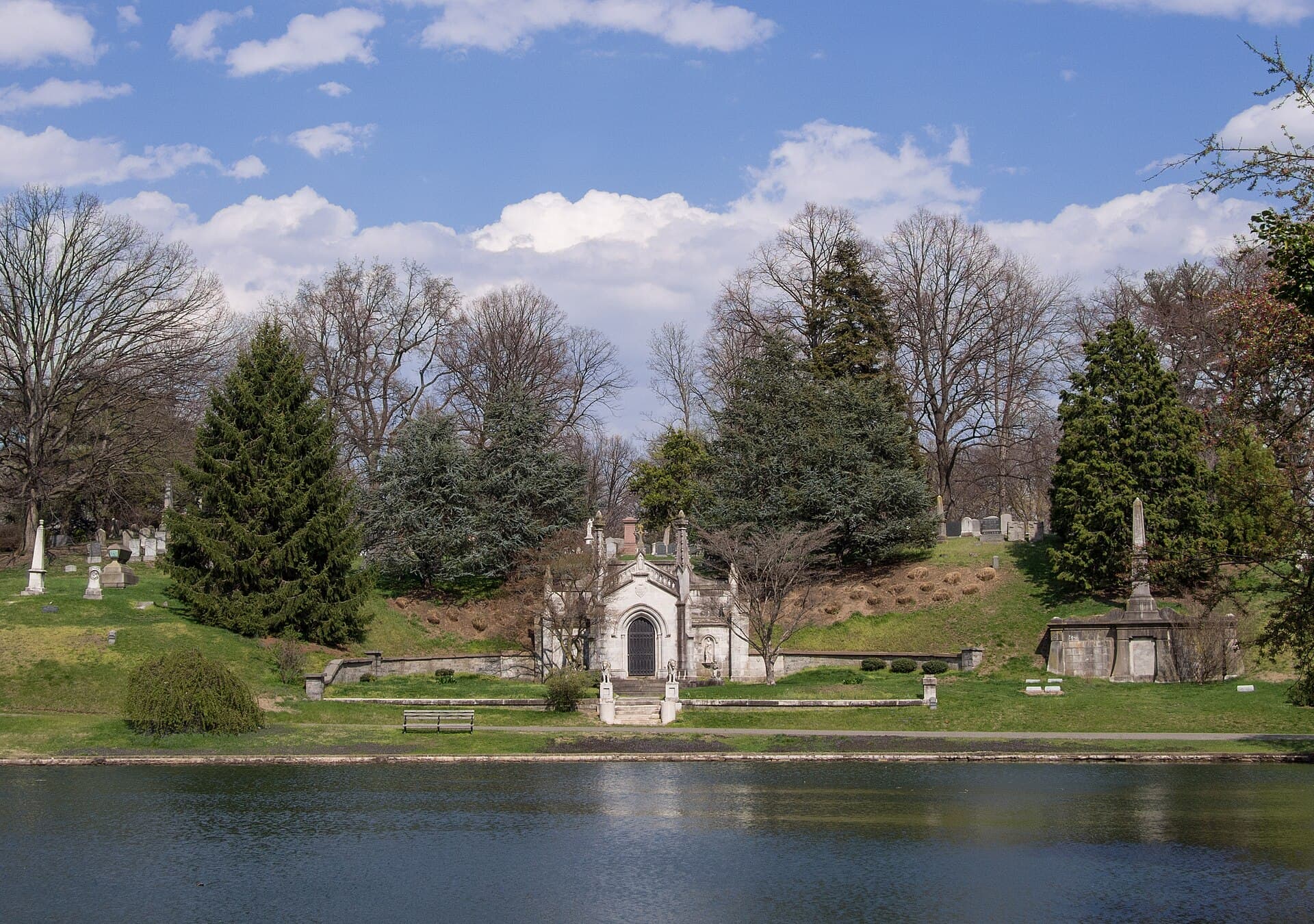
Bobolinks and meadowlarks in the Natural Meadow; great blue herons fish the Mere.
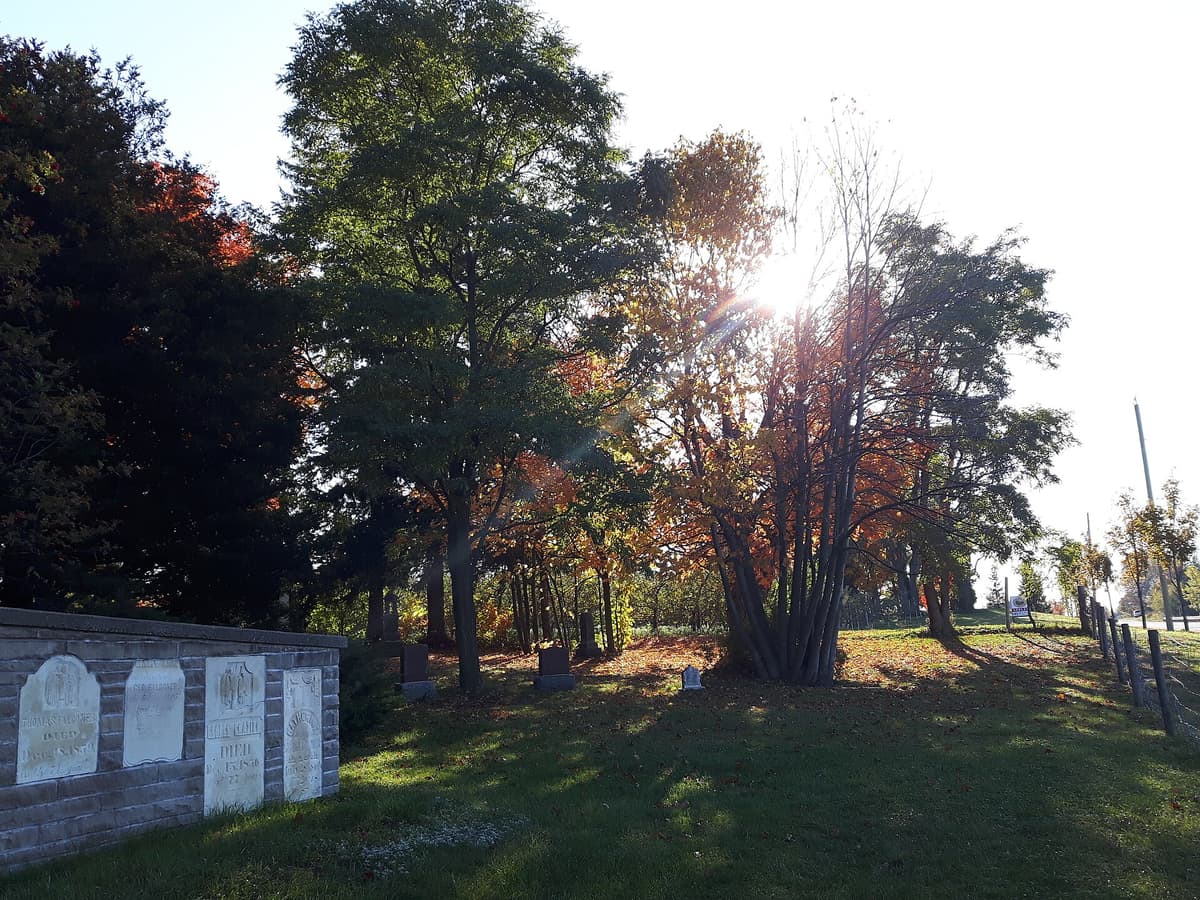
The maple row, the beech turning copper, and migrating warblers in the cedars.
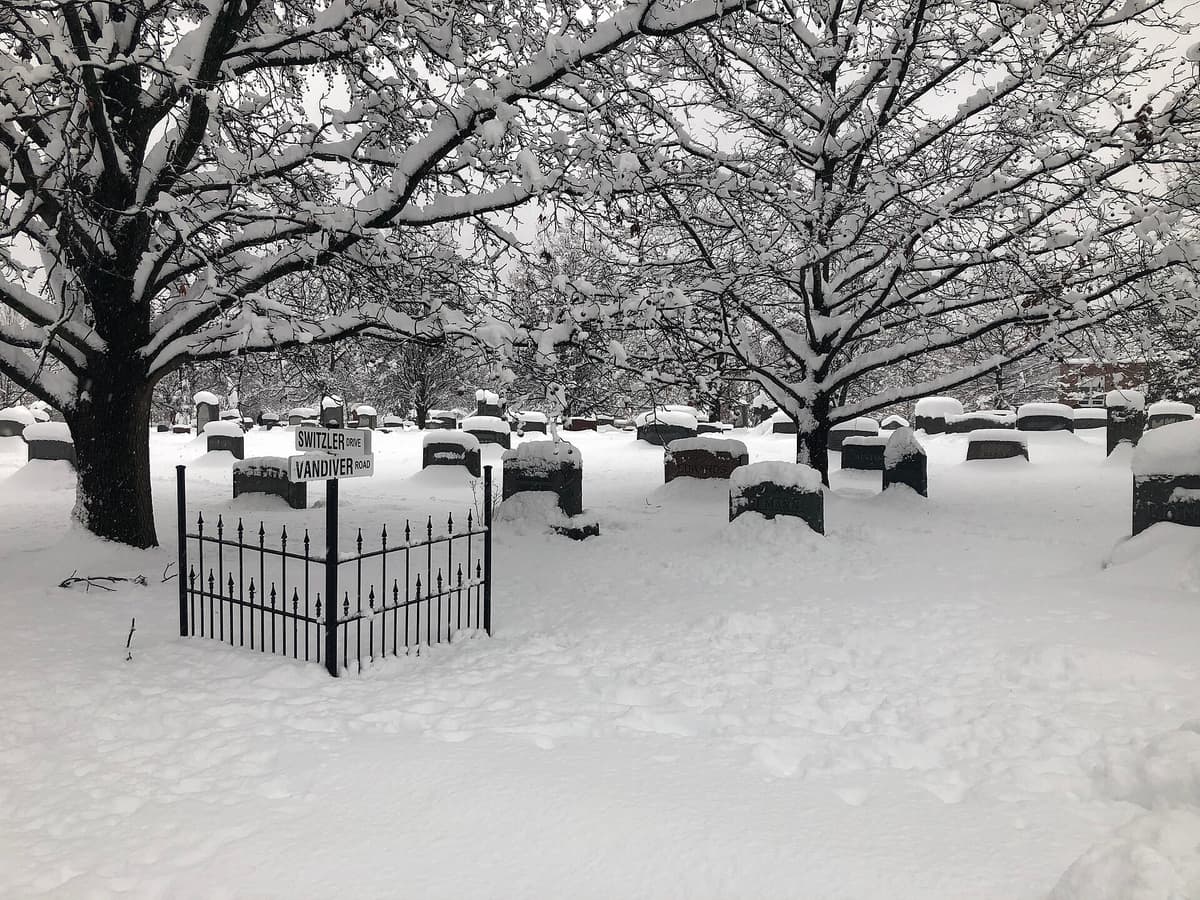
Owls roost in the spruces by the vault; look for fox and deer tracks in fresh snow.